.png)
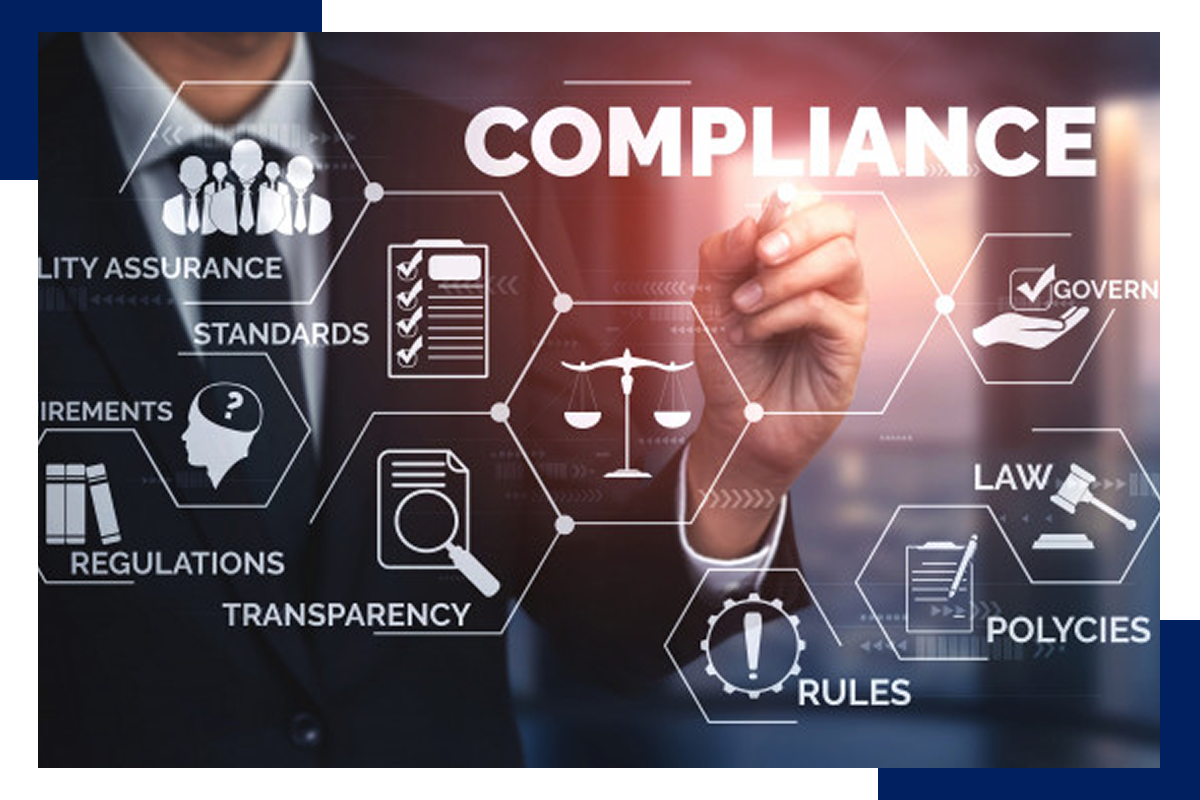
Businesses operating in India have various tax, company, labour, and regulatory compliances. Failure to file, renew or comply with such compliances will result in delays or problems like late payments, penalties or others. We offer our business compliance services to assist you to identify appropriate compliance obligations, ensure adherence to deadlines, retain necessary documents, and submit relevant filings. We assist businesses to identify gaps in their compliances from an early stage, thereby helping them act in time to correct their compliances.
In this way, business owners will be able to focus on managing the core operations of their businesses.
The concept of compliance management in business refers to the identification, monitoring, and fulfillment of those legal, tax, company-related, labor-related, and regulatory requirements that apply to the business. Requirements may include compliance with legal obligations, filing taxes, license renewal, record keeping, auditing, and regulatory reporting.
A good business compliance management system enables a business to monitor its obligations and deadlines through the course of the year. This includes keeping all necessary documentation and keeping track of changes to relevant laws and regulations. In contrast with reacting to notices or being late on deadlines, businesses can use a structured approach to managing compliance requirements.
Compliance management for a business is important since all businesses have to comply with some specific legal, tax, corporate, or regulatory needs according to their form and activities. Noncompliance with such needs results in the imposition of fines, penalties, notices, or any other regulatory actions depending on the nature of the noncompliance. Effective compliance management will ensure that businesses have their records correct and are ready for auditing, due diligence, fundraising, lending, and many other aspects of business.
There could be various compliance needs for businesses in India depending on their corporate form, turnover, number of employees, industry, location, registrations, and business operations. Types of business compliances are:
Firms may be required to handle GST, income tax, TDS, advance tax, payment of taxes, and other applicable tax compliances.
Firms having employees may be required to comply with all applicable laws related to PF, ESI, wage laws, records of employees, leave laws, and others.
Firms or LLPs may be required to be compliant with MCA/ROC requirements, statutory compliances, record keeping, board of directors’ requirements, auditing, and other applicable laws.
Firms that are into manufacturing, handling waste, dealing with pollution, or any other activity may be required to comply with all applicable environmental laws.
Certain firms may have industry-specific compliances. For instance, the food industry needs to be FSSAI compliant. The financial industry needs to comply with RBI requirements and others.
An effective compliance process enables businesses to understand their requirements, stay on schedule, keep documentation, and continually monitor their compliance position. Key features include:
Each business has varying compliance obligations depending on a wide range of issues, including the nature of the business, turnover, number of employees, type of industry, registrations, transactions, and relevant laws.
|
Business Type |
Main Compliance Load |
Filing Frequency |
|
Startup |
Tax, GST where applicable, TDS, MCA/ROC, and other applicable registrations. |
Monthly, quarterly, or annual. |
|
MSME |
GST, income tax, TDS, labour and other applicable requirements. |
Based on applicable requirements. |
|
Private Limited Company |
ROC filings, audit, income tax, GST, board-related and other company law requirements. |
Ongoing, quarterly and annual. |
|
Public Limited Company |
Companies Act requirements, financial reporting, audit, tax and applicable SEBI or stock exchange requirements. |
Ongoing and periodic. |
It is advisable for a business to check its compliance obligations according to what it does rather than just go by a list.
Business compliance management may be challenging when the requirements are dispersed across various laws, governing bodies, government websites, and filing dates. Some common challenges faced by businesses include:
A structured compliance management process can help businesses address these challenges more effectively.
Non-compliance can cause problems financially, legally, and operationally for a business. The problems that are faced will depend on the nature of the requirement, the length of the non-compliance period, and the law. In certain situations, a business may be liable to pay late fees, interests, fines, notices, and/or other penalties. There could also be impacts on registration, license, and/or ability to conduct regulated activities in some cases of serious or repetitive violations. There may also be problems arising from non-compliance when doing audits, financing, loans, due diligence, or other kinds of business dealings. It is best if businesses consider fixing their compliance issues early on.
With a soundly implemented compliance program, it is much easier for companies to handle their legal and regulatory obligations. The following process will help companies do this:
Periodic reviews make sure that the compliance program still works for the company as it changes and grows.
Dealing with all the compliance issues by oneself can be a time-consuming process, especially for smaller businesses and companies that are growing. Outsourcing the compliance management process will allow one to get some professional help and pay attention to other aspects of the business.
The major benefits include:
Professional help may come in handy if there are several registrations, employees, taxes or any other issues.
There are some straightforward steps that organizations could undertake to streamline their compliance management processes:
Adopting these practices would help organizations catch any possible issues in time and avoid compliance failures.
Multiple compliance requirements may prove difficult to deal with, especially when a company has various tax, corporate, labor, and compliance-related responsibilities. CA Surya Prakash Associates offers professional assistance that enables companies to know more about and deal with their compliance requirements.
The way we work includes identification of compliance requirements, keeping track of important deadlines, maintenance of required documents, and assistance in dealing with compliance gaps.
Handling multiple compliance requirements may take away a lot of time that could otherwise be used for business activities. CA Surya Prakash Associates assists businesses in managing their tax, corporate, statutory and other compliance obligations using a systematic process.
Through our Compliance Management Services, we assist businesses in identifying their compliance obligations, keeping track of deadlines, maintaining records, filing documents, and dealing with non-compliance issues. If you require assistance with business compliance management, please contact CA Surya Prakash Associates on +91-9506666255.

We help businesses identify, organize, and manage applicable tax, corporate, statutory, and regulatory compliance requirements through a structured process.

Support for applicable GST, income tax, TDS, advance tax, and other tax compliance requirements to help businesses manage their tax responsibilities.

We help businesses track filing, payment, renewal, audit, and reporting deadlines through an organized compliance calendar to reduce the risk of missed requirements.

We help identify missed filings, documentation gaps, and other potential compliance issues so businesses can take appropriate corrective action on time.

Assistance with tracking applicable licenses, registrations, certificates, and renewal dates to help businesses avoid unnecessary lapses.
Business compliance management is the process of identifying, monitoring, and fulfilling legal, tax, statutory, and regulatory obligations. It helps businesses meet filing deadlines, maintain required records, avoid penalties, reduce compliance risks, and operate according to applicable laws.
Key business compliances in India may include ROC filings, income tax returns, GST returns, TDS compliance, statutory audits, annual filings, maintenance of company records, and other regulatory requirements applicable to the business structure and activities.
Companies, LLPs, startups, MSMEs, partnerships, and other registered businesses may need business compliance management services. Professional support helps them identify applicable obligations, maintain records, complete statutory filings, monitor deadlines, and manage changing legal and regulatory requirements.
Statutory compliance refers to obligations imposed directly through applicable laws and statutes, such as tax or corporate filings. Regulatory compliance covers requirements issued by regulatory authorities, industry regulators, and government bodies governing specific business activities.
Startups can maintain compliance by identifying applicable laws, creating a compliance calendar, maintaining accurate records, completing statutory filings on time, monitoring tax obligations, and seeking professional guidance when requirements change or become more complex.
Penalties for business non-compliance in India depend on the applicable law and nature of the default. Businesses may face late fees, monetary penalties, interest, notices, additional filing requirements, or other regulatory action for non-compliance.
Businesses should review their compliance requirements regularly, preferably throughout the financial year. Periodic reviews help identify new obligations, upcoming deadlines, changes in regulations, missed filings, and documentation gaps before they create compliance or financial risks.
Documents may include incorporation records, PAN, TAN, GST registration details, accounting records, financial statements, tax returns, statutory registers, licenses, previous filings, board resolutions, and other documents required according to the business structure and applicable compliance obligations.
Yes, compliance management services can help reduce legal risks by identifying applicable obligations, monitoring deadlines, maintaining documentation, completing required filings, and identifying potential compliance gaps. Timely professional assistance can help businesses address issues before they become significant.
Outsourcing business compliance management can provide professional expertise, better deadline tracking, organized documentation, reduced administrative workload, and improved compliance monitoring. It allows business owners to focus on operations while experienced professionals manage applicable statutory and regulatory requirements.
Effective business compliance management supports growth by maintaining proper records, reducing regulatory risks, improving operational discipline, and keeping statutory obligations up to date. A compliant business can also build greater confidence among investors, lenders, customers, and other stakeholders.
Businesses can track compliance deadlines using a structured compliance calendar covering GST, TDS, income tax, ROC filings, audits, licenses, and other obligations. Regular monitoring, reminders, document checklists, and professional compliance support can further reduce missed deadlines.
Business compliance management may be required across manufacturing, trading, IT, professional services, healthcare, education, e-commerce, finance, real estate, and other sectors. Specific compliance obligations vary according to industry, business structure, location, activities, licenses, and applicable laws.
CA Surya Prakash Associates can help businesses manage applicable statutory, tax, corporate, and regulatory compliance requirements. Professional support can include compliance planning, deadline monitoring, documentation, filings, record maintenance, and guidance for addressing potential compliance gaps.
Businesses can choose CA Surya Prakash Associates for professional guidance in managing statutory and regulatory obligations. The firm helps businesses understand applicable compliance requirements, organize documentation, monitor deadlines, and maintain timely filings while reducing administrative and compliance-related concerns.

Very prompt and accurate financial advice. Their expertise in taxation saved me both time and money.

One of the best CA services in Lucknow. They helped me with my business registration and accounting work efficiently.

I got my GST registration and returns done smoothly without any hassle. Very supportive and knowledgeable team.
.jpg)
Excellent service for income tax filing. The team is highly professional and guided me through every step. Highly recommended CA firm in Lucknow
.jpg)


